Spiffy Speak
Double Sided Curtains: Tips & Ideas to Double Up on Style & Functionality
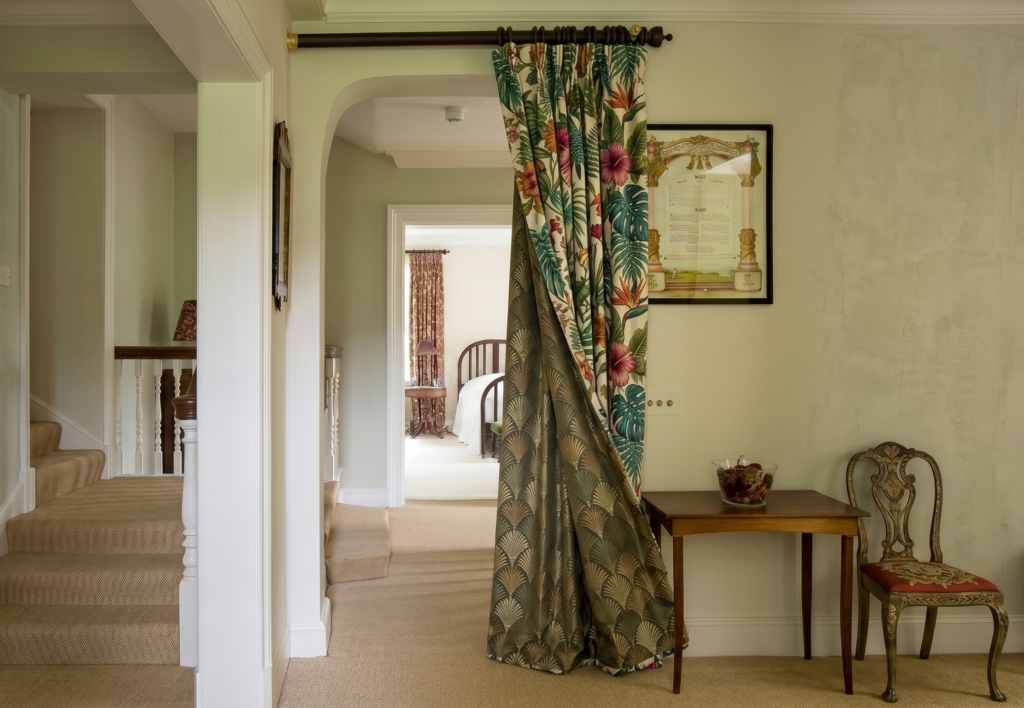
On an ordinary day and in a standard room setting, besides their functional roles, curtains are expected to dress up the room with color, softness and sumptuousness. In a more demanding setting, however, like when dressing glass doors and open doorways, these expectations rise. These settings often call for drapery to be elegant on both sides, and lead many clients to Spiffy Spools while looking for custom double-sided curtains.
Unlike standard curtains that feature drapery fabric in the front and lining in the back (or when left unlined, showing the backside of the main fabric), double-sided custom curtains are stitched with drapery fabrics on both sides. So when the curtains flaunt their reverse side as room dividers or bed canopies, you can rest easy knowing that both sides of the room benefit aesthetically.
In this blog, we share everything about double-sided curtains—the nuances related to their reversibility, the challenges that come with being two-sided, and ideas to turn them into sheer showstoppers.
Double-Sided Curtains: The Allure, The Trade-Offs & What to Consider Before you Commit to Reversible Drapes
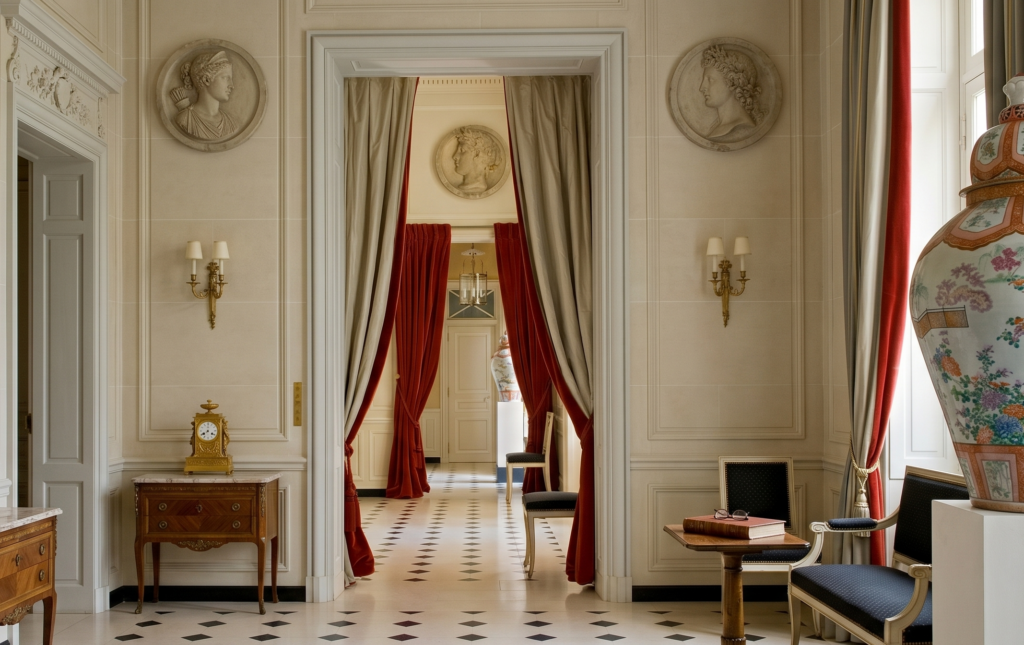
Double-sided curtains solve a challenge that many homeowners face – that of making the curtains look fabulous on both the front and the back. If lined, then all you see on the back of a standard set of curtains is a plain, neutral-toned fabric hardly worth a second look. And if you’d choose to leave the curtains unlined, the choice range would meet with restraint, because you’d have to reconsider fabrics like velvet, embroidered fabrics, and one-sided printed fabrics. Double-sided curtains circumvent these unpleasant scenarios by concealing the rear side of the face fabric and replacing the lining with drapery fabric.
PROS OF REVERSIBILITY: Double-sided curtains look good on both sides. Hence, they are ideally suited for room-dividers, open doorway curtains, bed canopies, and glass door curtains. And in opulent rooms where heavy pleated drapes are gathered into plush stacks partially exposing their reverse side, double-sided curtains prove thoughtfully done and evidently bespoke.
CAVEATS TO CONSIDER: The key thing of note is that reversibility is not to be read as sameness, meaning that the curtains don’t look exactly the same on both sides. No matter how well crafted, the rear side will inevitably show some evidence of hemming, as well as heading tape, and accessories like rings and pins as applicable to the heading style chosen.
Furthermore, since double-sided curtains use twice the fabric, they are inevitably heavier and pricier than standard, single-sided drapes. Hence, the following aspects need deeper consideration:
- Fabric: Double-sided curtains will be relatively heavy, potentially slowing down their glide on a pole or track, so it is advisable to choose low to medium-weight fabrics, at least on one side.
- Hardware: Install high-quality drapery poles that have the load-bearing capacity to carry double-sided curtains.
- Heading Style: The heading style determines how the curtains hang, glide and gather. Although we offer more than a dozen to choose from, when it comes to double-sided curtains, a few rise to the occasion far better than the others. As a result, more thought has to be poured into the choice of the heading style.
But, worry not, these caveats only need some clever styling. Ahead, we’ll share ideas to make the most of your reversible drapes and suggest ways to circumvent the complications you might meet on the way.
READ MORE: DIVIDE A ROOM WITH ROOM DIVIDER CURTAINS: IDEAS & TIPS
Top Tips for Styling Double-Sided Drapes
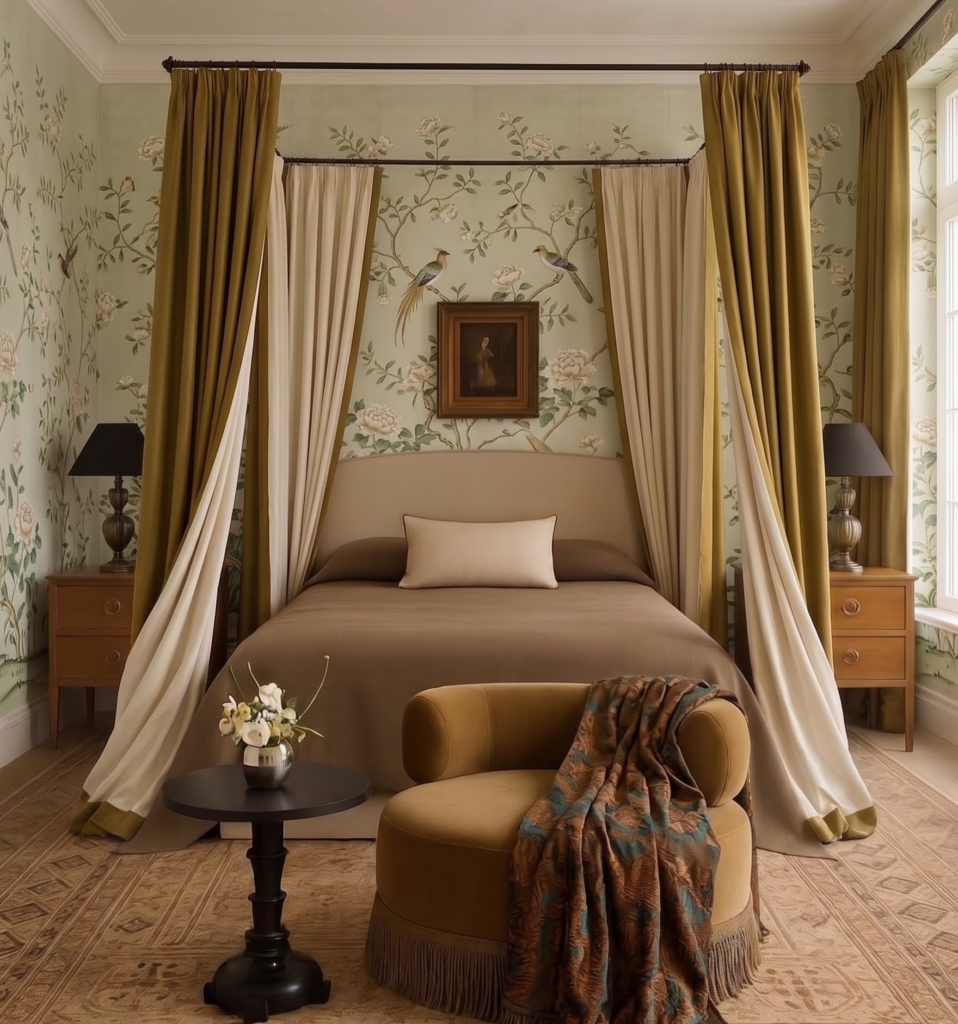
Built differently to meet a very unique set of goals, double-sided curtains open up rare design possibilities while bringing in their own set of styling considerations. Making the most of their two-sided elegance calls for a special eye of discernment, and hence, we are sharing our top tips to make your reversible curtains double up on both style and functional ease:
Choose a Heading Style that Knows the Game
The heading style refers to the style of the top header construction of the drapery—an element that has both aesthetic and functional implications. On the aesthetic front, the header determines how the drapery gathers and how tailored its pleats are. And on the functional side, the heading style determines how the drapery moves on the pole—styles that employ rings or grommets slide effortlessly, while headers with fabric tabs or pockets are better at staying put on the pole.
To sum it up, when it comes to double-sided curtains, there are two aspects to be considered when selecting the heading style: One, the header (and the way the drapery gathers as a result) must look presentable on the rear side. And two, it should complement the frequency of use. With these topline notes in mind, let’s review the heading styles offered at Spiffy Spools based on their suitability for double-sided curtains:
PINCH PLEATS: Pinch pleat curtains feature tailored pre-stitched pleats on the front, but on the back, they show the header tape, drapery pins and rings, and an irregular/ asymmetrical gather of fabric. Hence, pinch pleats are our least recommended style for double-sided curtains.
TAB TOPS, BACK TAB TOPS, TIE TOPS & ROD POCKET TOPS: These headers feature fabric tabs, tie knots or pockets, with their rear sides looking more or less similar to the front. Therefore, they cross all the boxes as far as the visual appeal is concerned. They don’t feature any heading tape on the rear, and their gather of fabric is even on both sides.
However, since these styles glide on fabric loops and pockets, they don’t offer the same ease of movement as styles that use rings or pins. Therefore, we recommend these four heading styles for double-sided curtains that are small-sized, or made of lightweight fabrics, or where the frequency of operation is expected to be very limited. Like, in the case of room-divider curtains that you don’t plan to retract any time, or doorway curtains that are kept stacked within holdbacks, serving more of an aesthetic role than functional.
FLAT PANEL TOPS & GROMMET TOPS: In these heading styles, the headers feature a sleek profile and wavy folds, both on the front and the back. They look ‘similar’ on both sides, except—flat panel tops show their heading tape, while grommet tops drop a hint that the eyelets are reversed. However, the header and the gather of the fabric are presentable, and aided by rings/grommets, the curtains also promise a smooth glide. Hence, flat panel tops and grommet tops are easily our top recommendations for double-sided curtains.
READ MORE: DRAPERY HEADINGS STYLE GUIDE
Keep Weight in Check
With drapery fabric sewn on both front and back, double-sided curtains carry double the weight. Consequently, the curtains may glide slowly and require a tad more effort, calling for more consideration if they are meant to be operated everyday. Hence, we recommend taking steps to manage the weight of double-sided curtains, using one or more of these means:
- Choose lightweight fabrics. Instead of opting for heavy fabrics, go for light to medium-weight fabrics on either or both sides.
- Opt for multiple panels. For an excessively wide doorway or room-separator, avoid covering the entire span with one or two drapery panels. Instead, opt for multiple panels to distribute the weight, making them easier to glide.
- Choose a smooth-glide heading style. The ease of movement of the drapery largely depends on its heading style. As advised above, opt for headers that use rings or grommets – instead of fabric pockets and tabs – and the curtains will glide smoothly.
And there you have it—double-sided curtains that work double duty to aesthetise the room, while balancing the functionality flawlessly!
Make Full Use of the Double-Sided Canvas
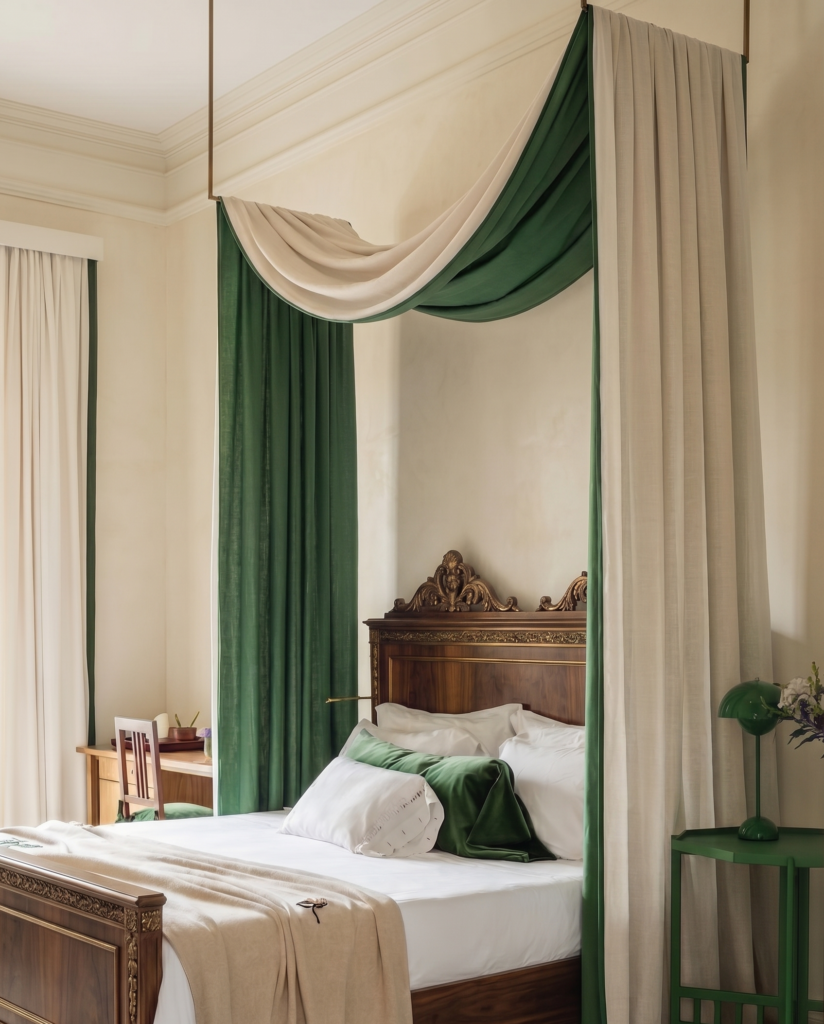
Double-sided curtains offer two sides for styling, not one, and that’s an opportunity that does not come by ever so often. Think of them as a blank canvas that can be filled with color and pattern on both sides, and choose one of these four ways to style your reversible curtains:
- Choose the Same Fabric: The simplest way of styling the reverse side of the drapery is to use the same fabric on the rear as the front. It offers a seamless visual continuation, creating a uniform look on both sides.
- Pair a Solid with a Pattern: Choose a patterned fabric and then pair it with a plain fabric that echoes its accent tones. The drapery will speak one color story in two design languages, one side catering to a pattern-friendly aesthetic, the other offering a relatively more quiet frontage with its solid tone.
- Choose Two Prints: A pattern-lover’s dream—drapery with two different prints on both sides! You can achieve this by choosing two patterned fabrics that share the same palette. And to avoid going over-the-top, we suggest balancing an intricate pattern like a toile or a damask with a quieter, low-profile one like a check or a stripe.
- Pair Two Solids of Different Colors: Keep both sides of the drapery plain, but let them carry two different personalities. Pair two complementary colors, or a neutral and a saturated one, or simply two neutral tones.
Bonus Tip: If you neither want the drapery to sport an entirely different look on the back compared to the front, nor you want them to look the same on both sides, consider bringing a gentle nuance in the texture. It’s a little difference, but one that counts. For instance, if you pair a velvet and a linen of the same color, you can balance velvet’s heaviness with linen’s lightness, helping to manage the overall weight of the drapery.
SHOP NOW: PATTERNED CURTAINS | PLAIN CURTAINS
Shop Double-Sided Curtains at Spiffy Spools
Double-sided curtains are a masterclass in looking impeccable from every angle. Call it the rare decorating triumph, where the drapery has no side screaming it’s the reverse. Or better still, where one set of drapes can sport two looks, shaping a distinct mood on either side of the room. On that closing note, we invite you to head to our virtual aisles where over 2000 premium drapery fabrics await, ready to dress up both sides of the room in the layered elegance of double-sided curtains.
READ MORE: TOP 35 CANOPY BED CURTAINS: IDEAS, TIPS & IMAGES FOR BEDROOMS